A LITTLE OF MY STORY
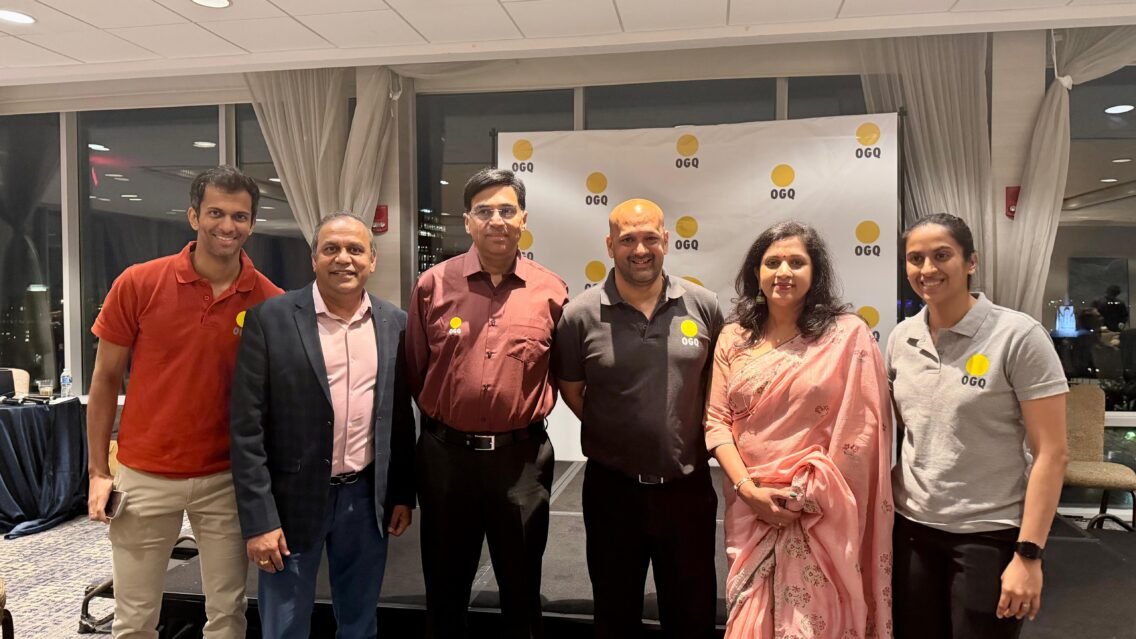
Some events leave you inspired. Others leave you transformed.
As a child, I was more drawn to art than sports. Yet I have a vivid memory of the summer of 1984 when my parents brought home their first black-and-white television. It was almost a community event. Neighbors would stop by to say hello and end up staying to watch whatever was on, even Krishi Darshan. That year, Doordarshan broadcast the Olympic Games.
I cannot say I understood all the rules. Watching television itself felt like a privilege back then, so we watched whatever came on. Soon, like many viewers, I became captivated by the thrill of competition, the excitement of victory, and the suspense of seeing which countries would make it to the podium.
Somewhere along the way, a question began to bother me. How could a country as large and populous as India struggle to make its mark on the world’s biggest sporting stage?
As I grew older, I began to understand. For generations, Indian parents encouraged their children toward careers that promised stability and security. Sports were rarely seen as a viable profession. I do not blame them. They had witnessed hardships and understood the value of financial security. Yet, in the process, countless sporting dreams often remained unexplored.
My perspective changed significantly after being introduced to the work of Olympic Gold Quest (OGQ). I came to realize that standing on an Olympic podium does not happen overnight, nor is it achieved through individual effort alone. What we witness in a few triumphant seconds is often the culmination of years of quiet struggle, unwavering discipline, the support of countless people behind the scenes, and a dream that refused to fade.
What moved me most was the realization that a medal can change the trajectory of an entire family, a village, a community, and even a nation. It inspires generations to dream bigger.
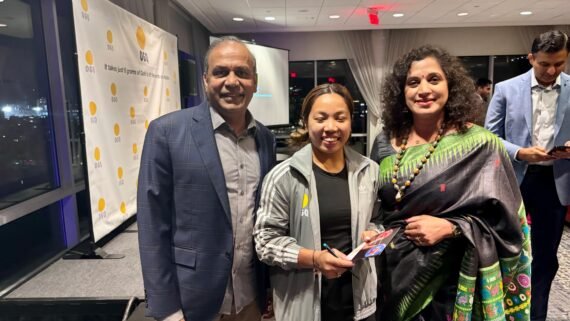 In 2024, our dear friend, philanthropist Vivek Sharma ji, hosted the OGQ team in Boston and invited us to an information session where we had the privilege of hearing the remarkable journey of Mirabai Chanu. Humble, genuine, and deeply inspiring, she spoke about her path from a small town in Northeast India to the Olympic podium in Tokyo. Her story moved many in the audience to tears.
That evening, I truly understood why people say it takes only six grams of gold to lift the worth of a nation.
A petite young woman lifting more than twice her body weight to win an Olympic medal did not get there by chance. Behind that moment stood years of discipline, pain, injuries, failures, and an unwavering belief in her dream. Her resilience spoke louder than any medal.
It also made me appreciate something else: talent alone is rarely enough.
Even the most gifted athletes need access to coaching, nutrition, sports science, injury management, mental conditioning, and logistical support.
Without those pieces in place, many dreams never get the chance to flourish.
That is where OGQ makes a difference.
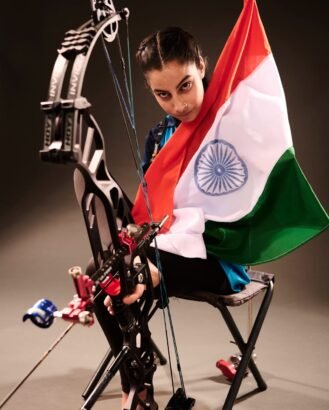 Equally inspiring was the story of Sheetal Devi, born without arms, who shoots arrows using her legs and cheek. She practices hundreds of shots every day with incredible determination and focus. Her journey has already inspired another young athlete from Odisha, Payal Nag, who lost all four limbs in a tragic accident and is now pursuing her own sporting dreams with remarkable courage and resilience. Payal won Gold in her debut Senior International tournament in April 2026 in Bangkok, Thailand.
OGQ proudly supports both para archers. Their stories remind us that human potential often exceeds the limitations we imagine.
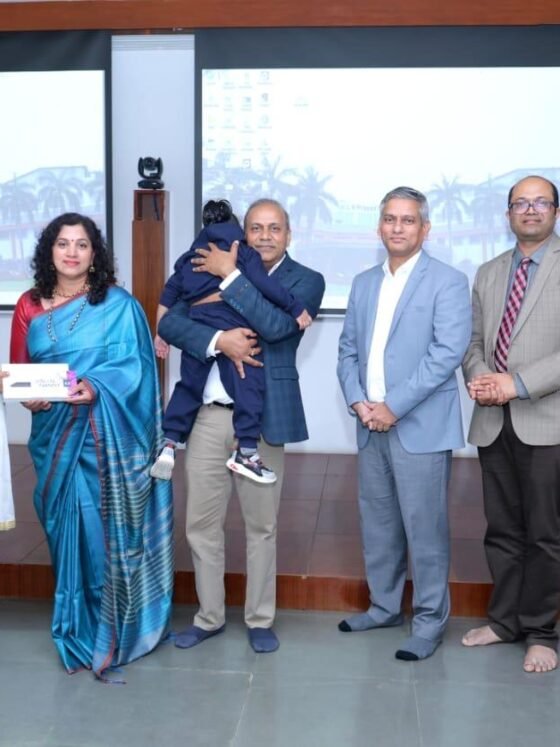
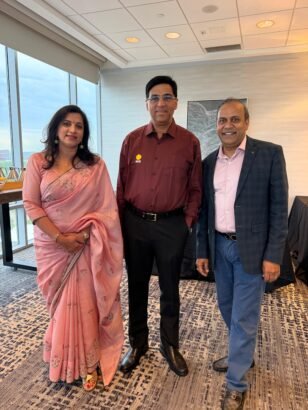 Recently, as preparations for the 2028 Olympics in Los Angeles gather momentum, Vivek ji once again hosted the OGQ team in Boston. My husband and I felt honored and privileged to meet chess legend Viswanathan Anand, popularly known as Vishy Anand. Despite being one of India’s most decorated sporting icons, an eight-time world chess champion, and a recipient of the Padma Vibhushan, he was extraordinarily humble.
During the fireside chat, he shared many experiences from his journey. One story, in particular, stayed with me. After one of his early victories, someone reportedly told him on a train, “Unless you’re Viswanathan Anand, you won’t make money playing chess.”
The irony, of course, was that the remark was made to Anand himself. It was a reminder that pioneers often walk a lonely road before the world catches up with them.
As one of the directors of OGQ, he emphasized that excellence is never achieved alone. Behind every champion stands an entire ecosystem of support, guidance, and belief. His insights reinforced why organizations like OGQ play such a vital role in nurturing talent and helping athletes realize their full potential.
The vision behind OGQ began with two sporting legends, Geet Sethi and Prakash Padukone. Drawing from their own journeys as elite athletes, they understood something profound: India’s sporting challenges were not due to a lack of talent, but often to a lack of physical, mental and financial strategic support system.
Winning happens in a fraction of a moment.
But before that moment comes years of training, setbacks, recovery, discipline, and sacrifice that often go unseen. Many talented athletes never reach their full potential simply because they do not receive the right support at the right time.
Since the 2012 London Olympics, OGQ-supported athletes have contributed to 13 Olympic and 35 Paralympic medals, along with numerous other international achievements. Their success is a powerful reminder that world-class talent exists in India, and what often makes the difference is timely support.
Today, OGQ supports over 480 athletes and para athletes across 11 Olympic and 9 Paralympic sports as they prepare for the Los Angeles 2028 Olympics and Paralympics. This year marks an important milestone, with the Commonwealth and Asian Games serving as crucial stepping stones on that journey.
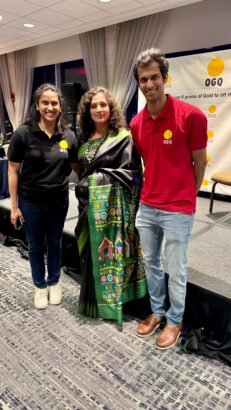
At the recent OGQ events in Boston, we were equally impressed by OGQ’s Managing Director and CEO, Viren Rasquinha, along with badminton champions Ajay Jayaram and Anoushka Parikh, whom we had the privilege of meeting across both gatherings. They reinforced a simple truth: excellence is nurtured through vision, commitment, and collective effort. They also shared an important observation that talent and hunger are often found in abundance in rural India, yet access to exposure and opportunity remains uneven.
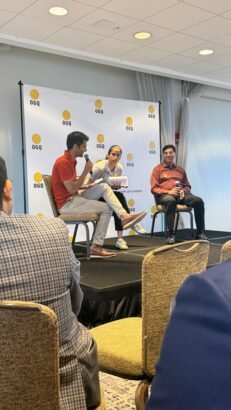
The evening also left me with another realization: support during failures is often far more important than celebration after victories.
Confidence is built not when everything goes right, but when someone stands beside you when things go wrong. OGQ does exactly that. It supports athletes before the headlines are written, before the medals are won, and before the world knows their names.
Most of us will never compete at the Olympics. But we can still become part of an Olympic journey. Sometimes, the difference between a dream deferred and a dream fulfilled is simply whether someone chose to support it.
The evening was not merely about raising funds.
It was about investing in human potential.
It was about creating pathways for future champions.
Because when one athlete rises, they often lift an entire community with them.
With the popularity of the IPL, increased sports broadcasting, social media visibility, and inclusion of sports in schools, the mindset of the younger generation is gradually shifting. Even young parents today are beginning to see sports as a viable career for their children.
Perhaps I have finally found an answer to the question that has stayed with me for years. India’s challenge has never been a shortage of talent; it has often been a shortage of opportunity and the support systems needed to help talent flourish.
If you have ever felt pride watching the Indian flag rise on the world stage, I encourage you to learn more about the extraordinary work being done by OGQ and consider supporting their mission.
A medal may be won by an individual, but the journey to that podium is always a collective effort!
PS:
Preparing this piece led me to revisit some inspiring stories from Odisha.
One is Budhia Singh, believed to be one of the world’s youngest marathon runners, whose remarkable journey was later portrayed in a biographical film.
Another is Anjali Munda, a young swimmer whose name has recently begun attracting attention.
Talent exists in every corner of India. What these children need is not potential; they already have that. What they need is timely guidance, opportunity, mentorship, and support. Organizations like OGQ help bridge that gap.
And when they do, a child’s dream can become a nation’s pride.
Thank you for reading! Feel free to like, share, and explore more of my posts. Stay tuned!


Jitendra Kumar Mohanty
06/05/2026Extremely happy to know that you and your husband Sri Panigrahi both are active in numbers of fields ,now in the field of sports. You are an extra Ordinary personality. Your such article will inspire many.
All the best.
Manorama Choudhury
06/05/2026Thank you for taking the time to read and reflect. I have tried my best to write with sincerity and purpose, hoping to raise awareness and awaken a sense of national pride in the reader.